


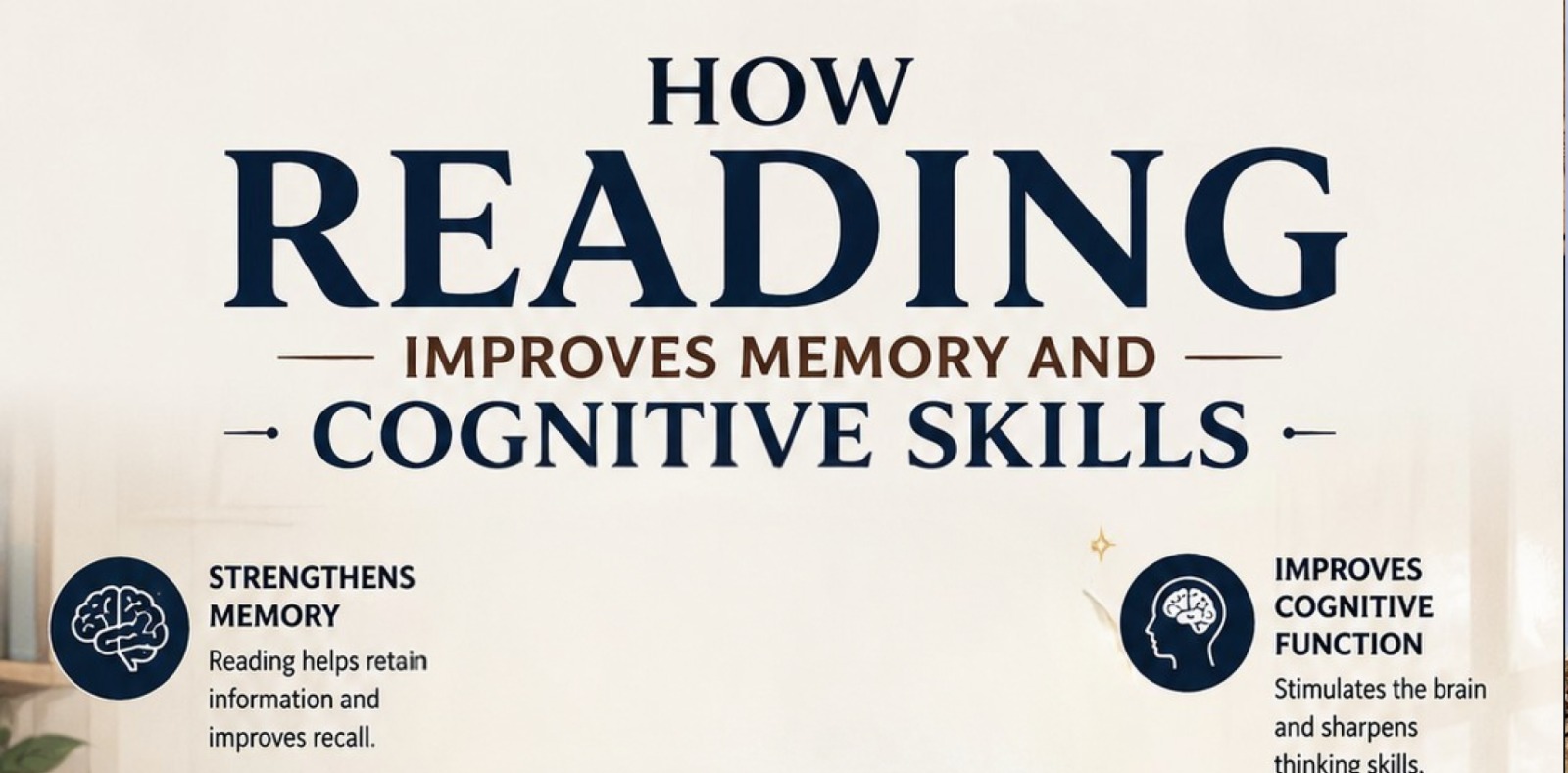
Reading is often seen as a simple leisure activity, but its impact on the brain goes much deeper than entertainment. Regular reading plays a significant role in strengthening memory and improving cognitive skills. It actively engages the brain, encourages mental exercise, and helps develop abilities that are essential for thinking, learning, and problem-solving.
One of the primary ways reading improves memory is by continuously challenging the brain to retain information. When you read, you are required to remember characters, events, details, or arguments as you move through the content. This constant recall exercise strengthens short-term memory and gradually supports long-term memory retention. The brain becomes more efficient at storing and retrieving information, which is beneficial not only for reading but also for daily tasks and learning activities.
Reading also enhances concentration and focus. In a world filled with distractions, maintaining attention on a single task can be difficult. Reading requires sustained mental effort, as the mind must stay engaged with the content to understand and follow it. Over time, this improves the ability to focus for longer periods without getting distracted. Stronger focus naturally supports better memory, since information is absorbed more effectively when attention is stable.
Another important benefit of reading is its effect on cognitive processing. As the brain interprets written words, it actively decodes meaning, forms connections, and builds understanding. This process strengthens neural pathways responsible for comprehension and reasoning. With consistent reading, these pathways become more efficient, allowing the brain to process complex ideas more easily over time.
Reading also stimulates imagination and visualization. When engaging with written content, the brain often creates mental images to represent what is being described. This mental simulation helps improve cognitive flexibility, which is the ability to shift thinking between different concepts or perspectives. A flexible mind is better at problem-solving and adapting to new information or situations.
In addition to imagination, reading supports critical thinking skills. As readers progress through content, they naturally begin to analyze ideas, question information, and form judgments. This active engagement encourages deeper thinking rather than passive consumption of information. The ability to evaluate and interpret information is a key cognitive skill that improves with regular reading practice.
Vocabulary development is another important cognitive benefit of reading. Exposure to new words in different contexts helps the brain understand meanings more effectively. Over time, this expands communication skills and improves the ability to express thoughts clearly. A stronger vocabulary also enhances comprehension, making it easier to understand complex ideas and instructions.
Reading also supports mental organization. When processing information from a text, the brain learns to structure ideas in a logical sequence. This helps improve the ability to organize thoughts in daily life, whether for decision-making, planning, or communication. Better mental organization reduces confusion and improves clarity in thinking.
Another valuable effect of reading is stress reduction, which indirectly benefits memory and cognitive function. When the mind is relaxed, it processes information more efficiently. Reading allows the brain to shift focus away from stressors and enter a calm, focused state. This mental relaxation improves overall brain performance and enhances the ability to retain and recall information.
Consistency is key when it comes to gaining cognitive benefits from reading. Occasional reading can be enjoyable, but regular reading helps the brain build stronger connections over time. Just like physical exercise strengthens the body, mental exercise through reading strengthens the brain. The more frequently the brain is engaged in reading, the more efficient it becomes at processing and storing information.
It is also important to note that different types of reading can stimulate different areas of cognitive development. Story-based content enhances imagination and emotional understanding, while informational content strengthens analytical and logical thinking. A balanced reading habit can therefore support a wide range of mental skills.
In conclusion, reading is far more than a recreational activity. It is a powerful mental exercise that improves memory, strengthens focus, enhances cognitive processing, and supports overall brain health. By engaging the mind consistently through reading, individuals can develop sharper thinking abilities and better mental performance in both academic and everyday life.