


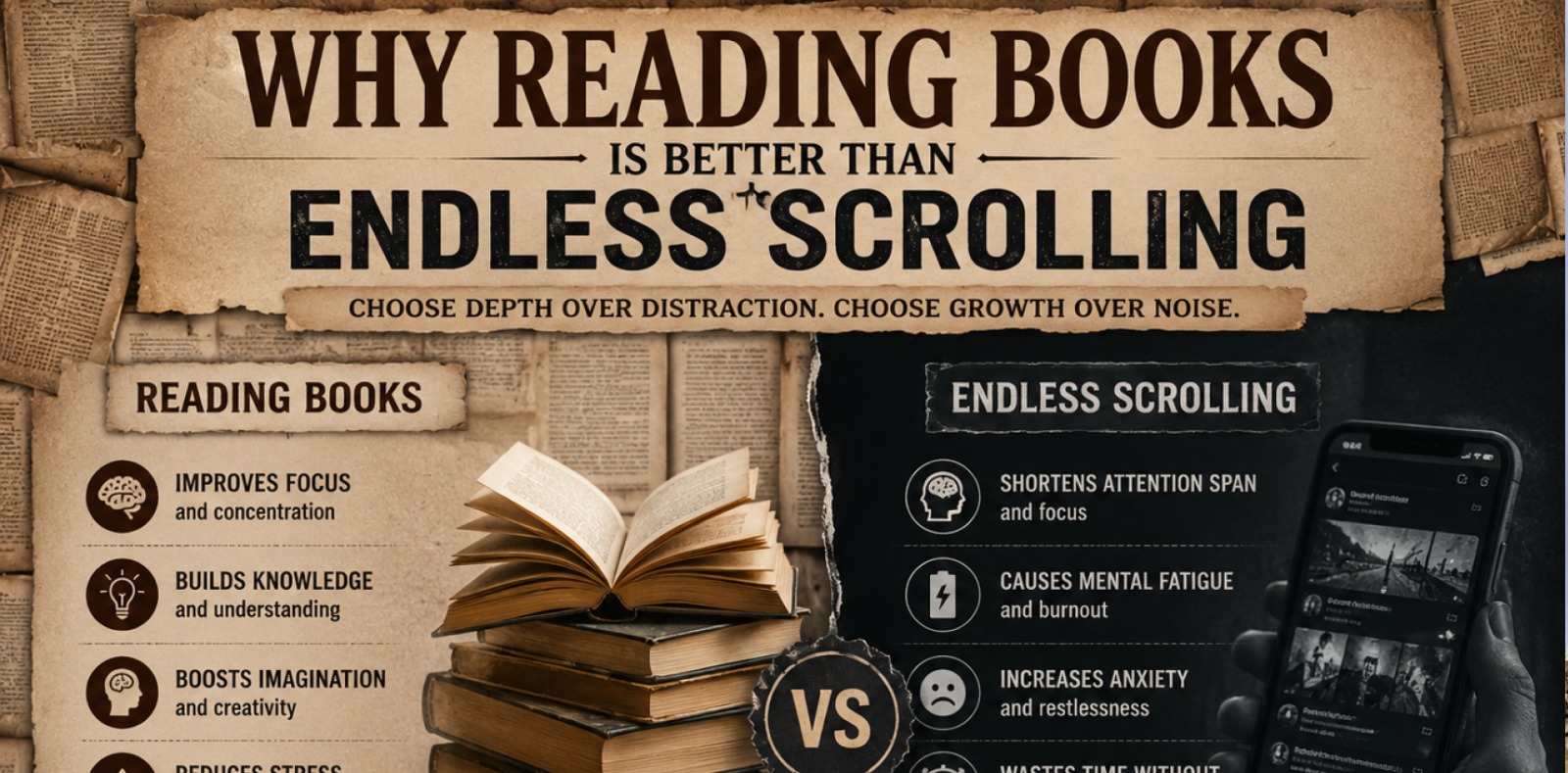
In today’s fast-paced digital environment, it is very easy to fall into the habit of endless scrolling. With constant streams of short updates, images, and quick content, attention gets pulled in many directions at once. While this may feel entertaining in the moment, it often leaves the mind feeling scattered and unproductive. Reading books, on the other hand, offers a more meaningful and focused experience that benefits the mind in several long-term ways.
One of the biggest differences between reading and endless scrolling is the level of attention required. Reading a book demands focus and sustained engagement. The mind must follow ideas, understand context, and remember details across pages. This strengthens concentration over time. In contrast, endless scrolling trains the brain to shift attention rapidly from one piece of content to another, making it harder to focus on a single task for long periods.
Reading also improves deep thinking. When you read, you are encouraged to process information at a slower, more thoughtful pace. This allows ideas to settle and connect with existing knowledge. It creates space for reflection, which leads to better understanding. Endless scrolling rarely allows this kind of depth because content is designed to be consumed quickly and replaced just as fast.
Another important benefit of reading is its positive impact on memory. Books often require readers to remember characters, concepts, or arguments over extended sections. This continuous recall strengthens memory skills and improves the brain’s ability to retain information. Endless scrolling, however, involves short bursts of content that are quickly forgotten, offering little opportunity for memory development.
Reading also supports imagination in a way that digital scrolling does not. When engaging with written content, the brain creates mental images to interpret descriptions and ideas. This active visualization strengthens creativity and helps the mind think beyond immediate visuals. Endless scrolling, especially when dominated by pre-made visuals, reduces the need for imagination because everything is already presented.
Another key advantage of reading is emotional balance. Books provide a steady and controlled flow of information, which can be calming for the mind. They allow readers to step away from constant noise and distractions. Endless scrolling, however, often exposes users to rapidly changing content, which can lead to mental fatigue and overstimulation. Over time, this can affect focus and overall mental clarity.
Reading also builds patience. Unlike scrolling, where new content appears instantly with a simple swipe, reading requires time and commitment. You must stay engaged to understand the full message or story. This process naturally develops patience and discipline, which are valuable skills in everyday life. The ability to stay with a task without constant distraction becomes stronger with regular reading.
Another important difference lies in the quality of information. Books are usually structured and organized, allowing ideas to build logically. This makes it easier to understand complex topics and retain meaningful knowledge. Endless scrolling often delivers fragmented information without structure, making it harder to form a clear understanding of any subject.
Reading also enhances language skills. Exposure to well-written content improves vocabulary, sentence structure, and overall communication ability. The more you read, the more naturally you begin to understand and use language effectively. Endless scrolling does not offer the same depth of language exposure, as much of the content is brief and informal.
In addition, reading encourages intentional use of time. When you choose to read, you are actively deciding to engage with meaningful content. This creates a sense of purpose and satisfaction. Endless scrolling, on the other hand, is often passive and unplanned, leading to time loss without clear benefit or fulfillment.
Over time, replacing endless scrolling with reading can significantly improve mental well-being. It reduces overstimulation, strengthens focus, and encourages thoughtful engagement with information. Even short reading sessions can create a noticeable difference in clarity and calmness.
In conclusion, while endless scrolling may offer quick entertainment, it rarely provides lasting value. Reading books, however, builds focus, imagination, memory, and deeper understanding. It encourages the mind to slow down, think clearly, and engage meaningfully with content. By choosing reading over constant scrolling, individuals can develop healthier habits and a more balanced, focused way of consuming information.